
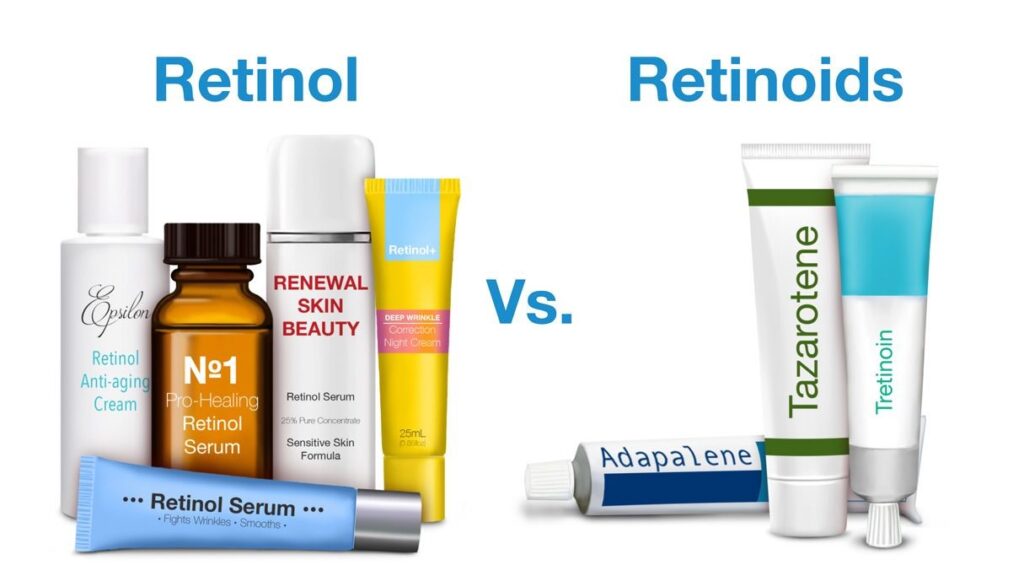
“Retinoids are ten times more bioavailable than retinol and work on the middle layer of skin (dermis), which helps change the structure and function of skin, resulting in diminished fine lines and wrinkles and improving acne breakouts, acne scars, and discoloration!”
First, one must understand the differences between retinoids and retinols based on their effect, potential, and claims. A board-certified dermatologist/ cosmetologist consultant must evaluate your skin concerns to recommend the one that suits you best. Of course, the prescribed topical medications work great if your aging status is primary and you are a candidate for premature aging. However, retinoids are prescribed as they help minimize premature signs of aging, improve skin texture, and maintain collagen and elastin production in the dermis. On the other hand, retinol is an over-the-counter, youth-enhancing active product that can be easily available at drugstores and in the cosmetic market. However, retinoids and retinol are different and must be thoroughly understood to know what they do and why they are used. Retinoids like Retin A and Tazorac are derivatives of vitamin A and prescription medication stronger than retinol. One may find retinol creams in the market with conventional branding claims the anti-wrinkles benefits, but using them without a cosmetologist’s prescription is not worth it. Secondly, retinol improves the effect of aging concerns only if it is conjugated with sun-advanced or broad-spectrum sunscreen. Retinols have different strengths and concentrations than active ingredients like retinoids and require a thorough assessment before recommending the specific one, as without having the skin evaluation, using any random retinol can cause more damage than benefits. In addition, one can expect mild irritation, dryness, and sun sensitivity when introducing retinol to their skincare routine. So, the board-certified dermatologist recommends using retinol with the right percentage at the right intervals. One must note that pregnant ladies who are trying to get conceived and breastfeeding women are not allowed to use retinols and retinoids.
Note: Retinols work on the top layer of the skin, promote skin cell turnover, brighten skin tone, reduce acne, and boost collagen production.
In the context of slowing down the aging process and improving the tone, texture, and collagen and elastin production, retinoids are 10x more bioavailable than retinol. Retinoids are pricey prescription medications only recommended after evaluating skin concerns and type. Retinoid is a “catch-all” term for all vitamin A-based products on the skin. The FDA claims that it can change the structure and functions of the skin, resulting in collagen and elastin production and other skin structures and reducing wrinkles and fine lines. Retinoids have a crucial role in unclogging pores, allowing other medicated creams, moisturizers/ serums, or gels to work better, reducing acne outbreaks and scars, and treating oil production, bacteria that cause acne, and inflammation.
Retinols can be the best measure against fine lines, wrinkles, discoloration, dark spots, and other early signs of aging. Still, it does not work on static aging, such as laugh lines, nasolabial folds, saggy skin, and lines at the corners of the mouth, across the cheeks, and along the neck. To address the concerns of static signs of aging, various surgical and non-surgical options are available at Dr. Karishma Aesthetics; you can schedule an in-person consultation and know your best option.
Call us at 9108969006/ 7624809006 and schedule your one-on-one consultation today. For more information on skin aging, please visit our website page, Dr. Karishma Aesthetics.