
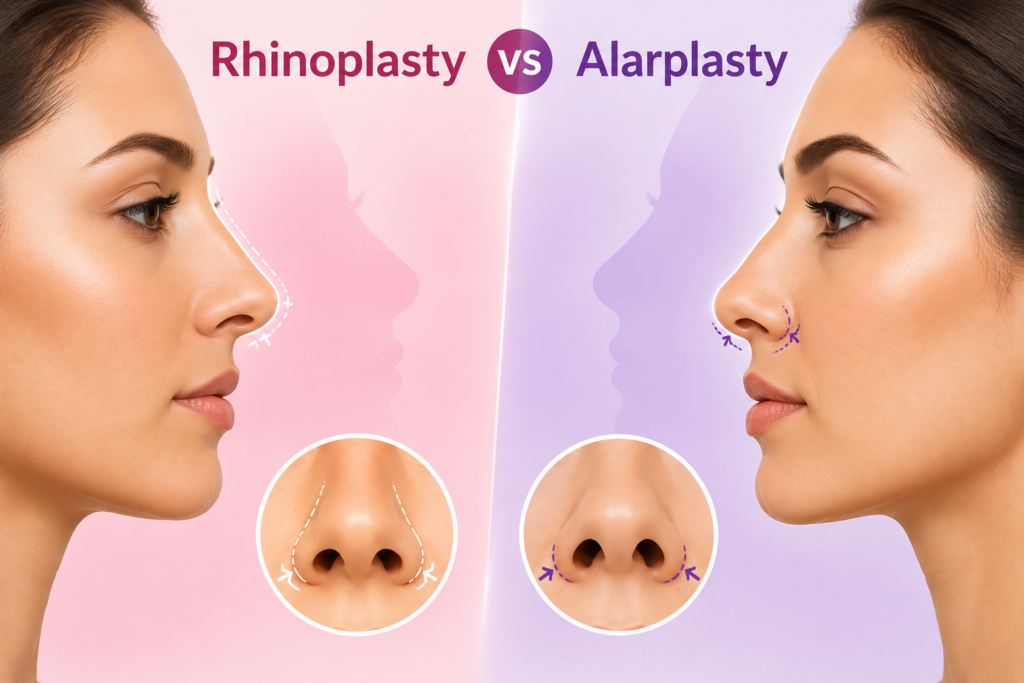
Rhinoplasty and alarplasty are different nose reshaping procedures. Rhinoplasty can change the overall shape, size, bridge, tip, or structure of the nose, while alarplasty mainly focuses on reducing or reshaping the nostrils and alar base. The right procedure depends on your nasal anatomy, facial proportions, and desired results
Choosing between rhinoplasty and alarplasty depends on the specific area of the nose you want to improve. While both are cosmetic nose procedures, they have different purposes. Rhinoplasty focuses on reshaping the overall nose, while alarplasty mainly addresses the size and shape of the nostrils or alar base.
For patients considering nose reshaping in Bangalore, understanding the difference between rhinoplasty vs alarplasty can help them discuss the most suitable treatment with a qualified plastic surgeon.
Rhinoplasty is a surgical procedure used to reshape the nose and improve its size, proportions, contour, or structure. Depending on the patient’s concerns, rhinoplasty surgery may involve the nasal bridge, tip, bone, cartilage, or nostrils.
People may consider rhinoplasty for concerns such as:
Because rhinoplasty can involve several parts of the nose, it is generally considered a broader form of nose reshaping.
Alarplasty is a more focused form of nose surgery that primarily changes the shape or width of the nostril area. The procedure involves the alar base, which forms the outer part of the nostrils.
Alarplasty may be considered when a person feels that their nostrils appear too wide or when the nostril shape does not provide the desired facial balance.
It is sometimes referred to as nostril reduction surgery because one of its common goals is to reduce the visible width of the nostrils.
The main difference is the area being treated.
Rhinoplasty can reshape multiple nasal structures, including the bridge, tip, bone and cartilage. Alarplasty primarily focuses on the nostrils and alar base.
In simple terms:
Rhinoplasty | Alarplasty |
Reshapes the overall nose | Focuses mainly on the nostril area |
May modify bone and cartilage | Primarily modifies the alar base |
Can address bridge, tip and overall nasal proportions | Can address nostril width and shape |
Broader nose reshaping procedure | More targeted nose procedure |
Therefore, alarplasty vs rhinoplasty is not always a choice between two interchangeable treatments. The appropriate procedure depends on the patient’s anatomy and treatment goals.
Rhinoplasty may be suitable for someone who wants to make more comprehensive changes to the shape or proportions of the nose.
For example, a patient may have concerns about a nasal hump, a wide bridge, a prominent tip, asymmetry, or the overall relationship between the nose and other facial features.
A consultation allows the surgeon to evaluate the nasal structure and determine whether rhinoplasty can address the concerns safely and effectively.
Alarplasty Surgery may be considered when the primary concern is the appearance of the nostrils or the width of the alar base.
It can be an option for patients who feel their nostrils look disproportionately wide or want a more refined nostril shape while maintaining the rest of the nose.
However, not every patient with wide nostrils needs alarplasty. The surgeon needs to assess the nose as a whole before recommending nostril reduction surgery.
In selected cases, rhinoplasty and alarplasty can be performed during the same surgical treatment. This may be considered when changes to the overall nose and nostril area are both required to achieve balanced results.
The decision should be based on the patient’s nasal anatomy, facial proportions, functional concerns, and desired outcome rather than simply combining procedures.
Recovery varies depending on the procedure and the extent of correction.
After rhinoplasty surgery, swelling and bruising can occur, particularly during the early recovery period. The nose gradually settles as the tissues heal, and the final shape may take time to become apparent.
Rhinoplasty recovery time differs between patients, and following postoperative instructions is important for proper healing.
Alarplasty generally involves a more localized treatment area, but patients can still experience swelling, tenderness, or temporary changes around the nostrils. Alarplasty recovery depends on the extent of the procedure and individual healing.
Your surgeon will provide specific instructions about wound care, physical activity, sleeping position, and follow-up visits.
There is no single procedure that is right for everyone. If your concern involves the overall size, shape, bridge, tip, or proportions of your nose, rhinoplasty may be considered.
If your main concern is nostril width or the appearance of the alar base, alarplasty may be more appropriate.
In some patients, a combination may be recommended. A physical examination and detailed consultation are important before deciding on any nose shaping procedure.
When considering nose surgery, patients should look beyond cost and choose a qualified plastic surgeon with appropriate experience in rhinoplasty and facial aesthetic procedures.
If you are searching for the Best Rhinoplasty Surgeon in Bangalore, consider the surgeon’s qualifications, experience, approach to facial balance, surgical facility, before-and-after results, consultation process, and postoperative care.
A detailed consultation can help you understand whether rhinoplasty, alarplasty, or another treatment is appropriate for your individual concerns.
No. Rhinoplasty is a broader nose reshaping procedure, while alarplasty mainly focuses on the nostril and alar base area.
Alarplasty can reduce the visible width or modify the shape of the nostrils in suitable patients. It does not necessarily reduce the entire nose.
Yes. They can be combined in selected patients when both overall nose reshaping and nostril refinement are required.
Recovery varies by patient and procedure. Rhinoplasty generally involves a broader surgical area, while alarplasty is more localized. Your surgeon can provide a personalized recovery estimate.
The choice depends on the specific nasal features you want to change. A qualified plastic surgeon can assess your nasal structure and recommend the appropriate approach.
Alarplasty is performed with appropriate anaesthesia to keep the procedure comfortable. Some patients may experience mild soreness, swelling, or tenderness during the initial recovery period.
Alarplasty involves small incisions around the nostril area. When properly planned and cared for, scars can become less noticeable as they mature during the healing process.
Initial healing usually takes place over the first few weeks, while swelling and scar appearance can continue to improve over time. Individual healing varies from patient to patient.
Yes. Rhinoplasty can include changes to the nostrils when they are part of the overall treatment plan. However, isolated nostril concerns may sometimes be better addressed with alarplasty.
No. Suitability depends on the nostril shape, alar anatomy, facial proportions, skin characteristics, and desired outcome. A consultation with a qualified plastic surgeon is necessary to determine whether alarplasty is appropriate.
Rhinoplasty and alarplasty can both improve the appearance of the nose, but they address different concerns. Rhinoplasty provides broader nose reshaping, while alarplasty focuses mainly on nostril and alar base refinement.
Understanding the difference between rhinoplasty vs alarplasty is the first step. A personalized consultation with a qualified plastic surgeon can help determine which procedure best matches your facial anatomy, aesthetic goals, and expectations.