01
Facial Proportion
Rhinoplasty can be planned around the proportions of your nose and the surrounding facial features rather than treating the nose as an isolated feature.

Personalised rhinoplasty surgery designed around your facial proportions, nasal structure and individual goals. At K Aesthetics, Dr. Karishma Kagodu focuses on refined nose reshaping that complements your face rather than overpowering it.
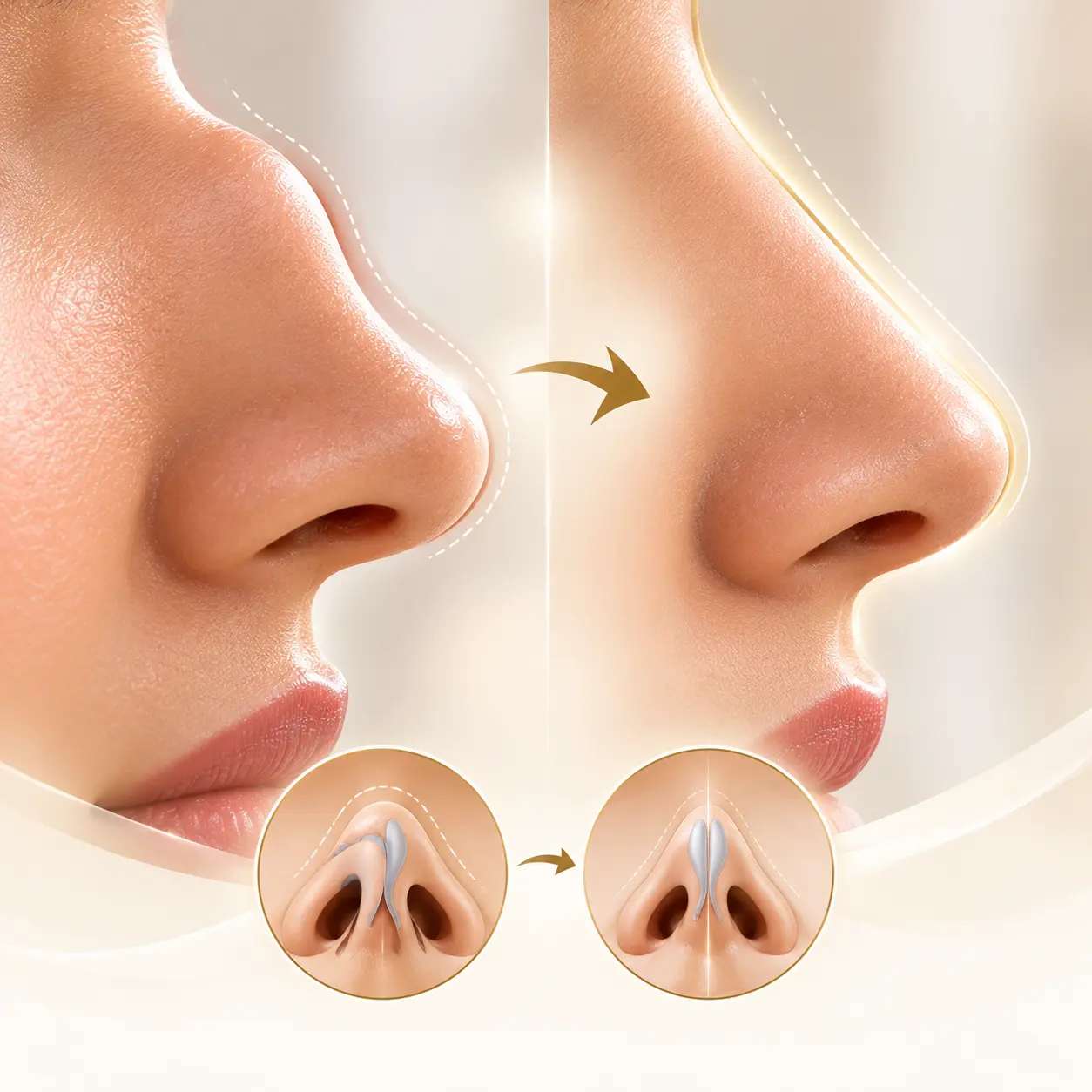
Rhinoplasty is a surgical procedure used to reshape, refine or reconstruct the nose. Depending on the individual's anatomy and goals, treatment may involve changes to the nasal bridge, tip, nostrils, overall nasal proportions or structural framework.
The goal is not simply to create a smaller nose. Good rhinoplasty considers the relationship between the nose, cheeks, chin, lips and overall facial profile to create a result that feels proportionate and natural.
Rhinoplasty can be planned around the proportions of your nose and the surrounding facial features rather than treating the nose as an isolated feature.
Depending on anatomy and treatment goals, rhinoplasty may refine the bridge, tip, nostrils or overall shape of the nose.
A carefully planned nasal profile can help create a more balanced relationship between the nose, forehead, lips and chin.
When required, rhinoplasty can address structural aspects of the nose as part of an individualised surgical plan.
The planning philosophy focuses on proportion and controlled refinement rather than creating an artificial or overly altered appearance.
No two noses are identical. Surgical planning is based on your anatomy, concerns, facial proportions and realistic treatment goals.
Rhinoplasty can be planned differently depending on whether the primary concern is appearance, nasal structure, breathing or a combination of aesthetic and functional goals.
Focuses on improving the appearance, shape and proportion of the nose.
May address structural concerns that contribute to nasal airflow problems.
Focuses specifically on refinement, projection or shape of the nasal tip.
A more complex procedure considered when additional correction is required after previous nose surgery.
Takes individual nasal characteristics and facial identity into account while planning aesthetic refinement.
May combine nasal reshaping with correction of the nasal septum when both aesthetic and structural concerns need consideration.
Your concerns, nasal anatomy, facial proportions and treatment goals are assessed to determine whether rhinoplasty is appropriate and what approach may best suit your individual anatomy.
Swelling, bruising and temporary nasal congestion can occur during the early recovery period.
As swelling settles, the shape and contours of the nose gradually become clearer.
Follow-up appointments allow your surgeon to assess healing and monitor your progress.
Final nasal refinement can take time as tissues continue to heal and settle.
*Recovery and healing timelines vary depending on the procedure, individual anatomy and overall health.
Surgical planning considers the nose in relation to your overall facial proportions, rather than using a one-size-fits-all template.
Your nasal structure, skin characteristics, concerns and desired outcome are assessed before deciding on the surgical approach.
Rhinoplasty requires detailed understanding of nasal anatomy, structural support and facial aesthetics.
The focus is on controlled refinement and proportion while preserving the character of the face.
The consultation is an important part of the process, allowing you to discuss concerns, expectations, limitations and available options.
Post-operative reviews help monitor healing, swelling and the gradual development of your rhinoplasty result.

MBBS · MS · MCh (Plastic & Reconstructive Surgery)
Dr. Karishma Kagodu completed her MS in General Surgery at J.J.M. Medical College, Davangere, followed by her MCh in Plastic Surgery from St. John's Medical College, Bangalore.
Her clinical practice includes facial aesthetics, body contouring, breast surgery and reconstructive procedures. Her approach emphasises anatomical proportion, tissue preservation and subtle refinement.
For patients considering rhinoplasty in Bangalore, the objective is to understand what you want to change while also determining what is realistically achievable for your individual nasal anatomy.
I wanted a change that looked natural rather than an obviously operated nose. The consultation helped me understand what would actually suit my face.
I appreciated how much attention was given to my concerns and facial proportions before discussing surgery.
The process was explained clearly, including the recovery period and the fact that the final result develops gradually.
Patient experiences vary. Healing, recovery and results depend on individual anatomy and the specific surgical plan.
Rhinoplasty is surgery performed to reshape or reconstruct the nose. Depending on the individual case, it may address the bridge, tip, nostrils, nasal proportions or structural concerns.
Suitability depends on factors such as your nasal anatomy, overall health, expectations and the concerns you want to address. A personal consultation is required to determine whether surgery is appropriate.
No. Rhinoplasty can be performed for aesthetic concerns, functional concerns or a combination of both. The appropriate approach depends on the individual's nasal structure and goals.
Recovery varies from person to person and depends on the extent of surgery. Swelling and bruising are common during the early recovery period, while refinement of the nose can continue as the tissues heal.
The nose changes gradually as swelling reduces and the tissues settle. The exact timeline varies according to the procedure, anatomy and individual healing response.
Rhinoplasty cost in Bangalore varies depending on the complexity of the procedure, surgical technique, anaesthesia, hospital or facility charges and whether additional procedures are required. A personalised estimate can be discussed after consultation.
In selected patients, functional nasal surgery may help address structural factors affecting nasal airflow. An assessment is needed to determine the cause of breathing difficulty and the appropriate treatment.
Look for a qualified plastic surgeon with appropriate surgical training, experience in facial and nasal procedures, a clear approach to individualised planning and a consultation process that openly discusses benefits, limitations, risks and recovery.
Start with a detailed consultation to understand your nasal anatomy, discuss what you would like to change and explore whether rhinoplasty is the right option for you.