
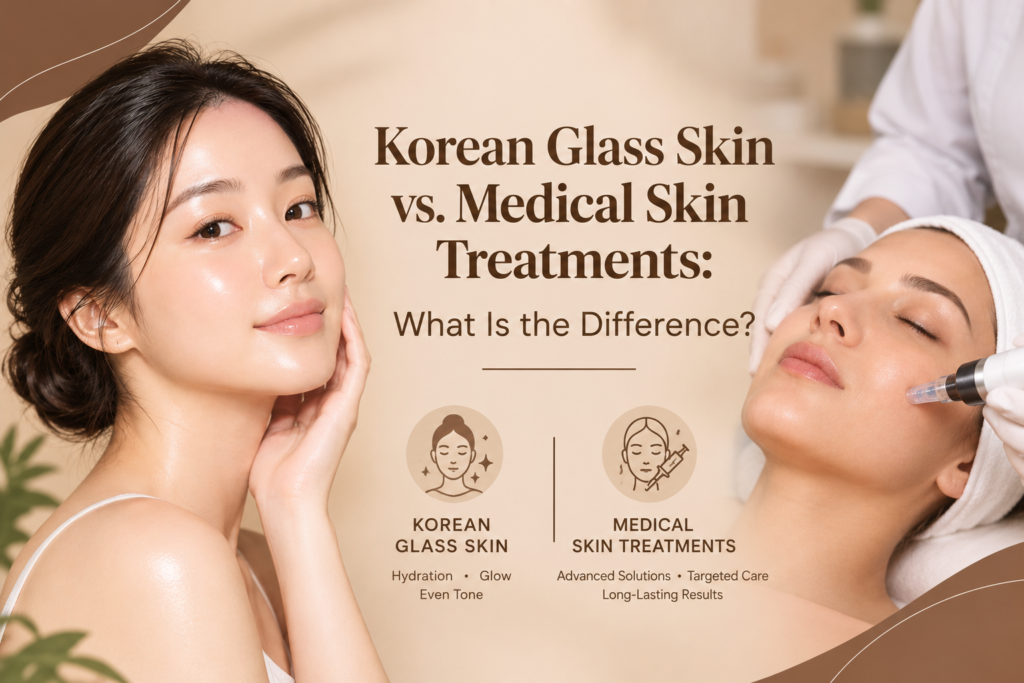
Korean glass skin has become a popular beauty trend for people who want smooth, hydrated, and radiant-looking skin. From Korean skincare routines to hydrating serums and moisturisers, many people are exploring different ways to achieve a healthy glow. However, skincare products are not the only option for improving skin appearance. Medical skin treatments may also help address specific concerns, such as uneven skin texture, selected pigmentation issues, and acne scars.
Understanding the difference between Korean glass skin and medical skin treatments can help you make informed decisions about your skincare goals. At Kaesthetics, Dr. Karishma Kagodu, a qualified plastic and aesthetic surgeon, can be consulted regarding appropriate aesthetic treatment options based on individual concerns and clinical assessment.
Korean glass skin refers to a complexion that looks smooth, hydrated, clear, and luminous. It is a beauty trend rather than a specific medical procedure. The goal is to maintain healthy-looking skin through consistent skincare and suitable products.
A Korean skincare routine commonly includes:
The best Korean skincare products depend on individual needs. People with oily skin may prefer lightweight, non-comedogenic formulations, while those with dry skin may benefit from richer moisturisers.
It is important to remember that glass skin does not mean poreless or flawless skin. Natural skin texture and pores are normal, and results vary from person to person.
Medical skin treatments are professional procedures designed to address particular skin concerns. Depending on the condition, a qualified medical professional may recommend an appropriate treatment after examining the skin and reviewing the patient’s medical history.
Some professional skin treatments may include:
Not every treatment is suitable for every individual. Skin type, sensitivity, pigmentation risk, active acne, medical history, and recovery requirements should all be considered before choosing a procedure.
Korean glass skin focuses on hydration, daily skincare, and maintaining the skin barrier. Medical skin treatments focus on selected concerns that may require professional assessment and procedures beyond a regular skincare routine.
Korean skincare generally involves topical products such as cleansers, serums, moisturisers, and sunscreen. Medical skin treatments may involve specialised devices or controlled procedures performed by appropriately qualified professionals.
A consistent skincare routine may help improve dryness, dehydration, and dull-looking skin. Professional skin treatments may be considered for certain acne scars, uneven texture, persistent pigmentation, and selected signs of ageing.
The appropriate approach depends on the underlying skin concern. Neither skincare products nor medical procedures can guarantee perfect skin.
Korean glass skin has become a popular beauty trend for people who want smooth, hydrated, and radiant-looking skin. From Korean skincare routines to hydrating serums and moisturisers, many people are exploring different ways to achieve a healthy glow. However, skincare products are not the only option for improving skin appearance. Medical skin treatments can also address specific concerns, such as uneven skin texture, certain pigmentation issues, and acne scars.
Understanding the difference between Korean glass skin and medical skin treatments can help you make informed decisions about your skincare goals. At Kaesthetics, Dr. Karishma Kagodu, a qualified plastic and aesthetic surgeon, can be consulted regarding appropriate aesthetic treatment options based on individual concerns and clinical assessment.
The right skincare products depend on your skin type and tolerance. Professional treatments require an individual assessment because factors such as sensitivity, acne, pigmentation, and the risk of scarring can influence the choice of procedure.
Consulting a qualified professional can help you understand the potential benefits, limitations, and risks of available treatments.
Yes. Many people can improve their skin’s hydration and appearance through a consistent skincare routine without undergoing a medical procedure.
A simple routine may include:
Avoid introducing multiple active ingredients at once, as this may cause irritation. If you experience persistent acne, noticeable scars, or ongoing pigmentation, professional advice may help you understand the available options.
Medical skin treatments may be worth discussing with a qualified professional if you have concerns that have not improved with an appropriate skincare routine.
These may include:
Dr. Karishma Kagodu can be consulted regarding aesthetic concerns within her clinical expertise. The most appropriate treatment, if any, should be determined through an individual assessment rather than choosing a procedure solely because it is popular.
Depending on the concern, a dermatologist or another qualified medical professional may also be appropriate.
In some cases, Korean skincare routines and professional skin treatments can complement each other. A gentle skincare routine may help maintain hydration and support the skin barrier before and after a suitable procedure.
However, skincare products may need to be adjusted around treatment sessions. Following chemical peels, microneedling, or certain laser procedures, the skin may become more sensitive. Some exfoliants, retinoids, and potentially irritating products may need to be paused temporarily according to the treating professional’s instructions.
Always follow personalised aftercare guidance and avoid assuming that every Korean skincare product is suitable immediately after a procedure.
The right choice depends on your skin type, concerns, and expectations.
Avoid selecting a treatment solely because it is trending on social media. An informed decision should consider realistic outcomes, potential side effects, recovery requirements, and alternative approaches.
No. Korean glass skin is a beauty trend describing smooth, hydrated, and luminous-looking skin. It is generally associated with skincare routines and products rather than a specific medical procedure.
Korean skincare refers to products and daily routines used to care for the skin. The phrase glass skin treatment may be used informally for different services, so it is important to confirm which procedure is being offered and what it is intended to achieve.
Certain treatments may improve selected skin texture concerns, including some acne scars and unevenness. Suitability and expected results depend on the condition, treatment method, and individual skin characteristics.
Not necessarily. Suitable skincare, moisturising, and regular sun protection can improve hydration and support healthy-looking skin. Professional treatments may be considered for concerns that need additional care.
Many Korean skincare products may suit Indian skin, but suitability depends on individual skin type, sensitivity, ingredients, and existing concerns. Introduce new products gradually and consider patch testing to help reduce the risk of irritation.
A qualified plastic surgeon may assess certain aesthetic concerns and discuss appropriate options within their expertise. Depending on the condition, a dermatologist or another qualified medical professional may be more suitable.
Yes. Regular use of broad-spectrum sunscreen with SPF 30 or higher helps protect the skin from ultraviolet damage and may help prevent worsening of certain pigmentation concerns. Reapply as directed, particularly during outdoor activities.
The choice depends on your skin concerns and goals. Skincare products may be sufficient for dryness and dehydration, while persistent pigmentation, acne scars, or textural concerns may benefit from professional evaluation.
Certain skin rejuvenation treatments may help improve selected texture concerns, depending on their cause and severity. A professional assessment can help identify suitable options and explain the expected benefits and risks.
Korean glass skin and medical skin treatments offer different approaches to improving the appearance of the skin. Korean skincare focuses on hydration, daily care, and supporting the skin barrier, while professional treatments may address specific concerns such as selected acne scars, pigmentation, and uneven texture.
The best option depends on your skin condition, goals, and professional assessment. You do not necessarily need a medical procedure to achieve healthy-looking skin, and not every trending treatment is suitable for everyone.
At Kaesthetics, Dr Karishma Kagodu can advise you on appropriate aesthetic options based on your concerns and clinical assessment. Choosing a personalised approach can help you set realistic expectations and make informed decisions about your skin.