
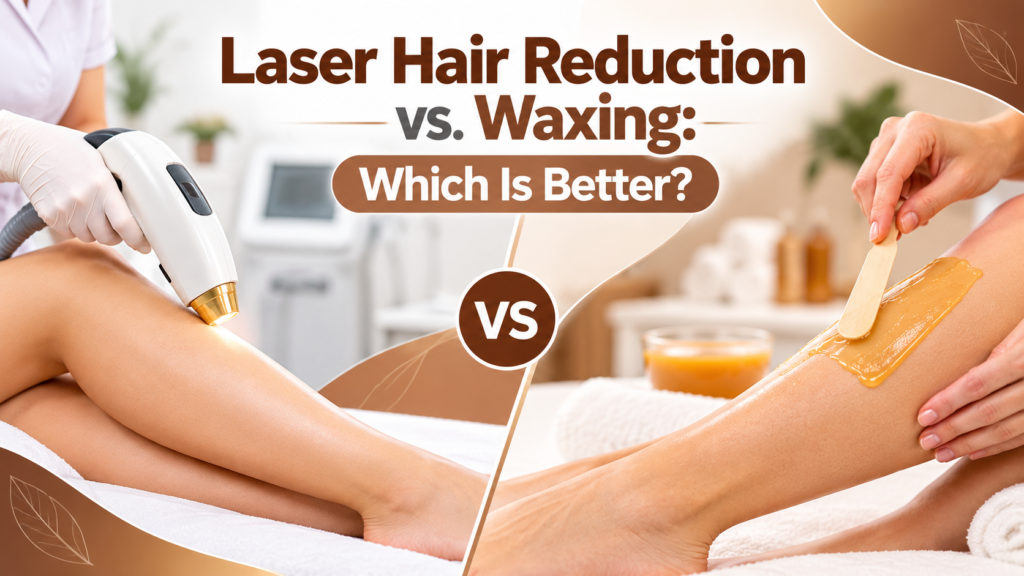
Unwanted body hair is a common concern for people looking for smoother skin and convenient hair removal options. Laser hair reduction and waxing are two popular methods, but they differ in how they work, how long the results last, their cost, and the maintenance required.
Laser hair reduction is generally more suitable for long-term hair reduction, while waxing provides temporary hair removal. The right choice depends on your skin tone, hair colour, budget, and personal preferences.
At Kaesthetics, Dr. Karishma Kagodu, a plastic, reconstructive, and aesthetic surgeon, is associated with aesthetic and surgical care. Understanding the benefits and limitations of different hair removal methods can help you make an informed decision about your skin care needs.
Laser hair reduction is a procedure that uses concentrated light energy to target the pigment in hair follicles. The absorbed energy produces heat, which damages the follicle and reduces its ability to produce hair.
Because hair grows in different cycles, multiple treatment sessions are usually needed. After completing the recommended sessions, many people experience a significant reduction in unwanted hair growth. However, some hair may regrow, and maintenance treatments may be required.
Laser hair reduction may be performed on areas such as:
The effectiveness of treatment depends on hair colour, skin tone, hormonal factors, the treatment area, and the laser technology used.
Laser treatment can reduce hair growth for an extended period, potentially reducing the need for frequent hair removal.
People who frequently experience ingrown hairs after waxing or shaving may benefit from laser hair reduction.
After the initial course of treatment, occasional maintenance sessions may be sufficient for some individuals.
Laser hair reduction can be used on several areas, provided the treatment is appropriate for the individual’s skin and hair characteristics.
Reduced hair growth may make everyday grooming easier and more convenient.
Waxing is a temporary hair removal method that removes hair from the roots. Wax is applied to the skin and then removed, pulling unwanted hair out with it.
Waxing is commonly used on the face, arms, legs, underarms, and bikini area. It provides relatively immediate smoothness, but hair gradually grows back.
Waxing may cause discomfort, redness, skin irritation, or ingrown hairs. Hot wax can also cause burns if it is used incorrectly.
Feature | Laser Hair Reduction | Waxing |
How it works | Uses light energy to target hair follicles | Removes hair from the roots |
Results | Long-term reduction in hair growth | Temporary hair removal |
Sessions | Multiple sessions are usually needed | Repeated every few weeks |
Discomfort | Mild to moderate discomfort may occur | Pulling sensation and pain |
Ingrown hairs | May help reduce ingrown hairs | May contribute to ingrown hairs |
Initial cost | Generally higher | Generally lower |
Maintenance | Occasional sessions may be needed | Regular appointments are required |
Hair colour | Works best on pigmented hair | Works on different hair colours |
The better option depends on your hair removal goals, skin characteristics, and budget.
Laser hair reduction may be suitable if you:
Laser hair reduction is less effective on white, grey, and very light-coloured hair because conventional laser devices rely on pigment in the hair.
Waxing may be suitable if you:
Neither method is ideal for everyone. Your decision should reflect your expectations, skin sensitivity, hair characteristics, and willingness to maintain treatment results.
Laser hair reduction can be performed on a range of skin tones when the appropriate device and treatment settings are selected. Some laser technologies are better suited to darker skin tones than others.
Possible side effects include temporary redness, swelling, and skin sensitivity. Burns, blistering, and pigmentation changes can also occur, particularly when inappropriate settings are used or the procedure is performed incorrectly.
A qualified medical professional should assess your skin tone, hair characteristics, medical history, and expectations before treatment. Protective eyewear is essential during laser procedures.
At Kaesthetics, Dr. Karishma Kagodu is a relevant professional reference for readers exploring aesthetic care. Confirm directly with the clinic whether laser hair reduction is offered and who performs the procedure before making a service-specific enquiry.
Following appropriate preparation and aftercare instructions can help reduce the risk of complications.
The cost of laser hair reduction depends on the treatment area, number of sessions, laser technology, and clinic. Smaller areas, such as the upper lip, may cost less per session than larger areas, such as the legs or back.
Waxing generally costs less per appointment, but the expense continues because treatments need to be repeated regularly.
Laser hair reduction requires a higher initial investment, but it may reduce the need for frequent hair removal over time. The overall cost varies according to individual hair growth, the number of sessions required, and maintenance treatments.
Before starting treatment, ask your provider about the estimated number of sessions, cost per session, expected results, and possible additional charges.
Laser hair reduction is generally better for long-term reduction in hair growth, while waxing is suitable for temporary hair removal. The right option depends on your skin type, hair colour, budget, and goals.
Laser hair reduction can provide long-lasting reduction in hair growth. However, some hair may regrow over time, and maintenance sessions may be required.
The sensation varies from person to person. Laser treatment may feel like a brief snapping sensation, while waxing produces a pulling sensation. Discomfort depends on the treatment area and individual sensitivity.
Multiple sessions are usually required because hair grows in different cycles. The number of sessions depends on the treatment area, hair characteristics, skin tone, and individual response.
Yes. However, waxing should generally be stopped before laser treatment because it removes hair from the follicle that the laser needs to target. Your provider will advise when to stop waxing and whether shaving is recommended.
It may be suitable for some people with sensitive skin, but a professional assessment is important. Your provider can evaluate your skin and determine whether treatment is appropriate.
No. Laser hair reduction should not be considered a guarantee of complete, permanent hair removal. It can significantly reduce hair growth, but some hair may remain or regrow.
Waxing usually has a lower upfront cost. Laser hair reduction generally costs more initially, but it may reduce ongoing hair removal expenses over time. The total cost depends on the number of sessions and maintenance required.
When comparing laser hair reduction and waxing, the main difference is how long the results last. Waxing provides temporary smoothness, whereas laser hair reduction can significantly reduce unwanted hair growth over time.
The right choice depends on your skin tone, hair colour, budget, and treatment goals. Understanding the benefits, limitations, and possible side effects of each method can help you make an informed decision.
For professional guidance on aesthetic concerns, Dr. Karishma Kagodu at Kaesthetics is a relevant point of reference. Contact the clinic to confirm available services and discuss the appropriate treatment options for your individual needs.