
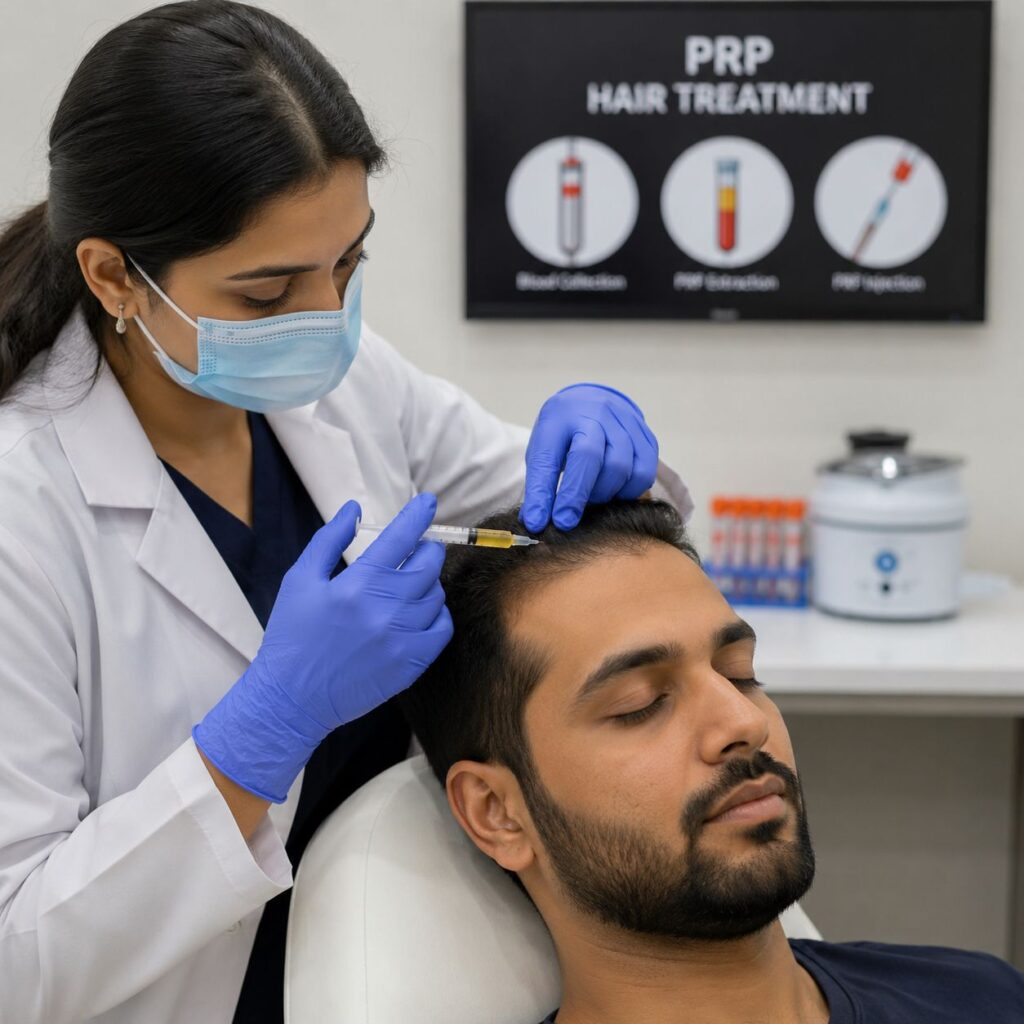
Hair loss can affect your confidence, whether you’re a man noticing a receding hairline or a woman experiencing thinning hair. If you’re looking for a safe, non-surgical solution, PRP Hair Treatment has become one of the most effective options for stimulating natural hair growth.
At Kaesthetics, Dr Karishma Kagodu offers advanced Platelet-Rich Plasma (PRP) Hair Treatment using modern techniques to help reduce hair fall, strengthen hair follicles, and promote healthier, thicker hair.
In this guide, we’ll explain everything you need to know about PRP hair treatment, including its benefits, procedure, cost, recovery, and success rate.
PRP Hair Treatment (Platelet-Rich Plasma Therapy) is a non-surgical treatment that uses your own blood to stimulate hair growth. The blood is processed to separate the platelet-rich plasma, which contains powerful growth factors. This plasma is then injected into areas of the scalp experiencing hair thinning or hair loss.
These growth factors help:
Because PRP uses your own blood, it is considered a safe treatment with minimal risk of allergic reactions.
Healthy hair growth begins in the hair follicles beneath the scalp. Factors such as genetics, hormonal changes, stress, ageing, and certain medical conditions can weaken these follicles, leading to hair thinning and increased hair fall.
PRP (Platelet-Rich Plasma) Hair Treatment uses a concentrated portion of your own blood, rich in natural growth factors, to nourish and stimulate the scalp. When injected into targeted areas, these growth factors help reactivate weakened hair follicles, improve blood circulation, strengthen hair roots, and encourage healthier, thicker hair growth.
Since PRP is prepared from your own blood, it is a safe and biocompatible treatment with a minimal risk of allergic reactions or side effects. It is a popular non-surgical option for individuals looking to reduce hair loss and improve overall hair density naturally.
The entire procedure is performed as an outpatient treatment and generally takes 45 to 60 minutes.
Dr Karishma Kagodu carefully evaluates your scalp, hair density, medical history, and the underlying cause of your hair loss to determine whether PRP is the right treatment for you.
A small sample of blood is collected from your arm, similar to a routine blood test.
The blood sample is placed in a specialised centrifuge machine that separates the platelet-rich plasma from the remaining blood components.
This concentrated plasma contains a significantly higher concentration of growth factors that aid tissue regeneration and follicle stimulation.
After cleansing the scalp, the prepared PRP is injected into areas affected by hair thinning using fine needles.
A topical anaesthetic may be applied to maximise patient comfort during the procedure.
Hair thinning in women can occur due to hormonal changes, pregnancy, menopause, PCOS, thyroid disorders, stress, poor nutrition, or genetic factors. Instead of complete baldness, many women experience gradual thinning across the scalp, which can affect hair volume and confidence.
PRP Hair Treatment is a non-surgical solution that helps nourish weakened hair follicles, reduce excessive hair fall, improve scalp health, and promote thicker, healthier hair growth. Starting treatment during the early stages of hair loss often provides better results and helps slow further thinning. A personalised consultation can determine whether PRP is the right treatment based on your hair condition and indivi
Hair loss is a common concern among men, often caused by genetics, hormonal changes, and ageing. Early signs such as a receding hairline, thinning at the crown, or reduced hair density can gradually become more noticeable if left untreated.
PRP Hair Treatment is a non-surgical option that helps stimulate weakened hair follicles, reduce hair fall, and encourage stronger, healthier hair growth. It is particularly effective during the early stages of male pattern hair loss and can help maintain existing hair while slowing further thinning. With timely treatment, many men experience improved hair density and may be able to delay the need for more invasive procedures such as hair transplantation.
You may be a suitable candidate if you experience:
During your consultation, Dr Karishma Kagodu will determine whether PRP alone or a combination of treatments will provide the best outcome.
One of the most frequently asked questions is about the PRP Hair Treatment success rate.
Clinical research and patient outcomes have demonstrated that PRP significantly improves hair density and reduces hair shedding in appropriately selected candidates.
Patients generally notice:
The overall success depends on factors such as:
Early intervention usually delivers the most successful outcomes.
The cost of PRP Hair Treatment depends on the severity of hair loss, the number of sessions required, and your individual treatment goals. Since every patient has a unique hair growth pattern and scalp condition, there is no one-size-fits-all treatment plan.
During your consultation, the doctor will assess your scalp, evaluate the extent of hair thinning, and recommend a personalised treatment plan. Based on this evaluation, you will receive a clear estimate of the treatment cost and the number of sessions needed to achieve the best possible results.
Recovery after PRP Hair Treatment is usually quick, allowing most patients to return to their daily routine soon after the procedure. You may experience mild redness, slight tenderness, or minimal swelling at the injection sites, but these temporary effects generally subside within 24 to 48 hours.
To support healing and achieve the best possible results, avoid washing your hair for the first 24 hours, refrain from strenuous physical activities for a day, protect your scalp from direct sun exposure, stay well hydrated, and follow the post-treatment care instructions provided by your doctor. Proper aftercare helps optimise the benefits of PRP therapy and promotes healthy hair growth.
PRP Hair Treatment delivers the best results when supported by healthy lifestyle habits and a consistent hair care routine. Eating a balanced, protein-rich diet, addressing any vitamin deficiencies, managing stress, and avoiding smoking can all contribute to stronger, healthier hair. Limiting excessive heat styling and harsh chemical treatments also helps protect your hair and scalp.
Using doctor-recommended hair care products and attending maintenance sessions as advised can further support long-term hair growth and help preserve the results of your treatment. Consistent care is essential for maintaining healthy, fuller-looking hair over time.
Successful hair restoration begins with an accurate diagnosis and a personalised treatment approach. At Kaesthetics, Dr. Karishma Kagodu combines clinical expertise with advanced PRP techniques to create customised treatment plans tailored to each patient’s hair loss pattern and scalp condition.
From a detailed hair and scalp assessment to precise PRP preparation and post-treatment follow-up, every step is focused on safety, effectiveness, and long-term results. Using modern technology and evidence-based practices, Kaesthetics aims to reduce hair loss, improve hair density, and promote healthier, natural-looking hair growth while providing comprehensive care throughout your hair restoration journey.
Healthy hair begins with healthy follicles. If you’re experiencing hair thinning, excessive hair fall, or early-stage baldness, PRP Hair Treatment offers a safe, natural, and scientifically proven solution to restore stronger, fuller hair.
Book a consultation with Dr Karishma Kagodu at Kaesthetics for a comprehensive hair assessment and a personalised treatment plan designed to help you regain your confidence with naturally healthier hair.
PRP Hair Treatment is generally well tolerated. Most patients experience only mild discomfort during the procedure. A topical numbing cream is applied before the treatment to ensure a more comfortable experience.
The number of PRP Hair Treatment sessions depends on the severity of hair loss and your individual hair restoration goals. Most patients benefit from 3 to 6 sessions, spaced 4 to 6 weeks apart, followed by maintenance sessions as recommended by the hair treatment doctor.
The PRP Hair Treatment success rate varies from person to person and depends on factors such as the cause of hair loss, the stage of hair thinning, overall health, and adherence to the recommended treatment plan. Patients with early to moderate hair loss often experience improved hair density, reduced hair fall, and healthier hair growth over time.
Yes. PRP Hair Treatment uses platelet-rich plasma prepared from your own blood, making it a safe and minimally invasive procedure with a very low risk of allergic reactions or serious side effects when performed by a qualified hair treatment doctor.
Most patients notice a reduction in hair fall within 4 to 6 weeks, while visible improvements in hair treatment for growth are typically seen after 3 to 6 months. Individual results may vary depending on the condition of the hair follicles and the number of treatment sessions completed.
PRP Hair Treatment is an effective solution for reducing hair fall and promoting natural hair growth, but it is not considered a permanent cure for all types of hair loss. Periodic maintenance sessions may be recommended to help sustain long-term results.
Yes. PRP for Hair Loss in Women can be highly effective for treating hair thinning caused by hormonal changes, PCOS, stress, pregnancy, menopause, or nutritional deficiencies. Women who begin treatment in the early stages of hair loss often achieve the best results.