
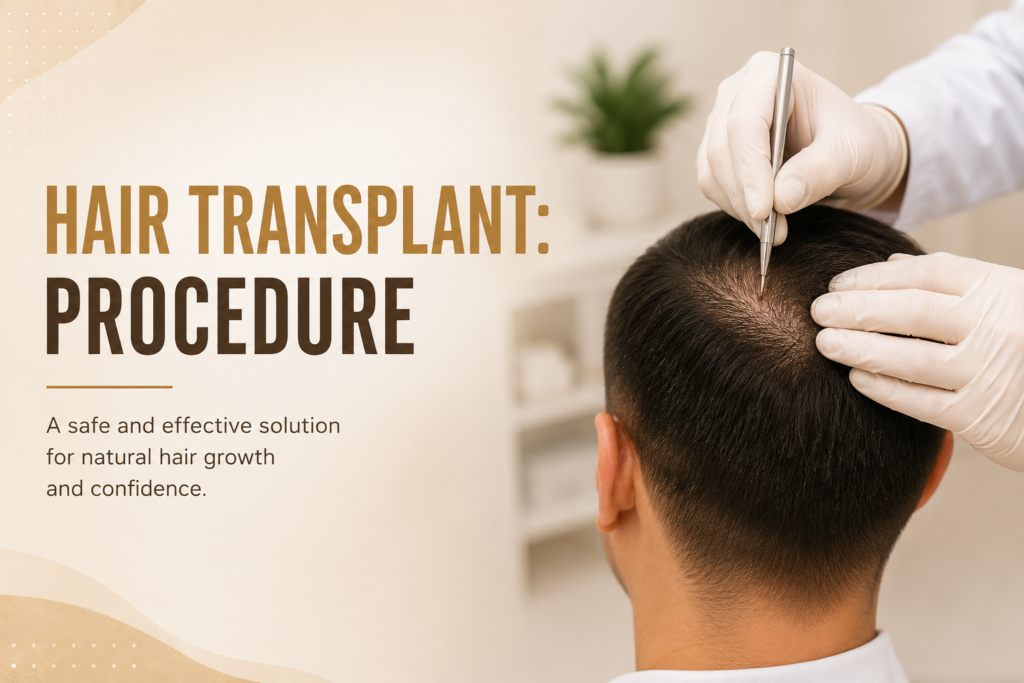
Yes. A hair transplant is a surgical hair restoration procedure that moves healthy hair follicles from a donor area, usually the back or sides of the scalp, to areas affected by hair loss. Modern techniques such as FUE and FUT can provide natural-looking, permanent results when performed by an experienced plastic surgeon. The success of the procedure depends on factors such as the patient’s hair quality, the extent of hair loss, and proper post-operative care.
Topic | Details |
Treatment | Hair Transplant Surgery |
Purpose | Restore hair in thinning or bald areas |
Common Techniques | FUE and FUT |
Procedure Duration | Approximately 4 to 8 hours |
Anaesthesia | Local Anaesthesia |
Hospital Stay | Usually Day Care Procedure |
Initial Recovery | 7 to 10 Days |
Hair Shedding | First 2 to 6 Weeks |
New Hair Growth | Around 3 to 4 Months |
Final Results | 9 to 12 Months |
Suitable For | Men and Women with Suitable Donor Hair |
Hair loss affects millions of people worldwide and can have a significant impact on self-confidence and overall appearance. Whether caused by genetics, hormonal changes, ageing, medical conditions, or lifestyle factors, thinning hair often leads people to seek long-term solutions rather than temporary fixes.
Among the various hair restoration treatments available today, hair transplant surgery remains one of the most effective and reliable options for restoring natural hair growth. Unlike temporary products that only improve the appearance of hair, a hair transplant relocates healthy hair follicles to thinning or bald areas, helping create permanent and natural-looking results.
If you are considering hair restoration, understanding the hair transplant procedure, expected recovery, cost factors, and long-term results can help you make an informed decision. This guide explains everything you need to know before choosing a hair transplant.
A hair transplant is a cosmetic surgical procedure that restores hair by transferring healthy hair follicles from one part of the scalp (known as the donor area) to areas affected by hair loss (known as the recipient area).
The donor hair is typically taken from the back or sides of the head because these follicles are generally more resistant to hair loss. Once transplanted, these follicles continue to grow naturally in their new location.
Unlike wigs, hair fibres, or temporary medications, a successful hair transplant provides long-lasting and natural-looking hair restoration.
Hair follicles that are genetically resistant to hair loss are carefully extracted from the donor area and implanted into regions where hair has become thin or absent.
Once the transplanted follicles establish a blood supply, they enter the normal hair growth cycle. During the first few weeks, transplanted hairs usually shed, which is a normal part of the healing process. New hair growth gradually begins over the following months, with full results typically becoming visible within 9 to 12 months.
Because the transplanted follicles retain their genetic characteristics, they continue to grow naturally in their new location.
A hair transplant may be suitable for individuals who:
Not everyone experiencing hair loss is an ideal candidate. A detailed consultation helps determine whether hair transplant surgery is the most appropriate treatment or whether other options, such as Platelet-Rich Plasma (PRP) therapy, medications, or a combination approach, may be recommended.
Understanding the cause of hair loss is essential before choosing treatment.
The most common cause is hereditary hair loss, also known as androgenetic alopecia. It affects both men and women and typically progresses gradually over time.
Hormonal fluctuations related to ageing, pregnancy, menopause, or thyroid disorders can contribute to hair thinning.
Certain illnesses, autoimmune disorders, nutritional deficiencies, and scalp conditions may lead to temporary or permanent hair loss.
Physical stress, emotional stress, rapid weight loss, poor nutrition, and inadequate sleep can also affect the hair growth cycle.
Some medications used for cancer treatment, blood pressure, arthritis, and depression may contribute to hair shedding.
Identifying the underlying cause helps create a personalized treatment plan and improves the likelihood of successful long-term results.
People choose hair transplant surgery for several reasons, including:
Modern hair transplant techniques focus not only on increasing hair density but also on designing a natural hairline that complements the patient’s facial features and age.
Hair transplant surgery has advanced significantly over the years, offering techniques that deliver natural-looking and long-lasting results. The two most commonly performed methods are Follicular Unit Extraction (FUE) and Follicular Unit Transplantation (FUT). The right technique depends on your pattern of hair loss, donor hair quality, lifestyle, and treatment goals.
A qualified plastic surgeon will recommend the most appropriate option after evaluating your scalp and donor area.
FUE is one of the most widely performed hair transplant techniques. Individual hair follicles are carefully extracted from the donor area using specialized instruments and then implanted into thinning or bald areas.
Because each follicle is removed separately, FUE does not require a long linear incision, making it a popular option for patients who prefer shorter hairstyles.
FUT, also called the strip method, involves removing a thin strip of scalp from the donor area. Individual follicular units are then carefully separated under a microscope before being transplanted.
Although FUT leaves a linear scar that is usually hidden by surrounding hair, it remains an effective option for patients requiring a large number of grafts.
There is no single “best” technique for every patient. The ideal procedure depends on factors such as:
An experienced plastic surgeon will recommend the technique that offers the safest procedure and the most natural outcome for your individual needs.
Understanding each stage of the procedure helps patients know what to expect.
The journey begins with a detailed consultation.
Your surgeon evaluates:
Clinical photographs may also be taken to assist with planning and future comparison.
One of the most important stages is designing the hairline.
Rather than creating an artificial straight line, the surgeon designs a natural-looking hairline based on:
A well-planned hairline is one of the biggest factors influencing natural-looking results.
The scalp is numbed using local anaesthesia to keep the procedure comfortable. Patients remain awake during surgery and generally experience minimal discomfort.
Depending on the selected technique:
Every graft is handled carefully to maximize survival.
Each follicular unit is examined and sorted according to the number of hairs it contains.
This careful preparation helps create:
Tiny recipient sites are created at carefully planned angles and directions.
This step determines how naturally the transplanted hair will grow. Proper placement ensures that the final result blends seamlessly with the surrounding hair.
Prepared grafts are implanted into the recipient area with precision.
The surgeon considers:
Meticulous implantation is essential for achieving natural-looking results.
One of the most common questions patients ask is:
How much does a hair transplant cost?
There is no fixed price because every treatment plan is customized.
The overall cost depends on several factors, including:
Instead of choosing treatment based solely on price, patients should focus on experience, safety, personalized planning, and the quality of results.
Yes, in selected patients.
Platelet-Rich Plasma (PRP) therapy may be recommended before or after hair transplant surgery as part of a comprehensive hair restoration plan.
PRP uses growth factors derived from the patient’s own blood to support scalp health and may aid the healing process. Depending on the individual’s condition, it may also help improve the quality of existing hair and complement transplanted follicles.
Your surgeon will determine whether PRP is appropriate based on your hair loss pattern, scalp condition, and treatment goals.
One of the most common concerns after a hair transplant is “How long will it take to recover?” While every patient’s healing process is unique, most people return to their daily routine within a few days. However, achieving the final hair transplant results requires patience, as new hair grows gradually over several months.
Understanding the recovery timeline helps set realistic expectations and ensures you follow the right aftercare instructions.
The first two days are focused on protecting the newly transplanted grafts.
You may experience:
During this period:
Healing begins quickly during the first week.
Most patients notice:
By the end of the first week, many people can return to office work if it does not involve strenuous physical activity.
Continue following your surgeon’s washing instructions carefully to avoid disturbing the grafts.
This stage often surprises patients because transplanted hairs begin to shed.
This is completely normal and is known as shock loss.
The hair shafts fall out, but the transplanted follicles remain healthy beneath the skin and prepare for a new growth cycle.
Do not worry if the treated area temporarily looks similar to how it appeared before surgery.
New hair growth usually begins during this period.
Initially, the hairs may appear:
Over the following months, these hairs gradually become thicker and stronger.
Most patients notice significant improvement in hair density.
The hair begins blending naturally with the surrounding scalp, and styling becomes easier.
Many patients feel more confident during this stage because visible improvement becomes increasingly noticeable.
Most of the final results become visible.
Hair appears:
The transplanted follicles continue growing like your natural hair and can be cut, washed, and styled normally.
Hair transplant results develop gradually rather than immediately.
Patients often experience:
Following complete healing, many patients notice:
The quality of results depends on several factors, including donor hair quality, the extent of hair loss, surgical planning, and adherence to post-operative care instructions.
Hair transplant surgery is generally considered safe when performed by a qualified and experienced plastic surgeon. However, like any surgical procedure, it carries some potential risks.
These may include:
Most of these effects improve as the scalp heals.
Following your surgeon’s instructions plays an important role in achieving optimal results.
Hair restoration is not only about replacing lost hair it is about creating a natural hairline that complements your facial features.
At Dr. Karishma Aesthetics, every patient undergoes a detailed consultation to evaluate the pattern of hair loss, donor hair quality, scalp condition, and long-term goals before any treatment is recommended.
Dr. Karishma Kagodu, an experienced plastic surgeon in Bangalore, develops personalized treatment plans based on each patient’s individual needs. Whether a patient is considering hair transplant surgery, PRP therapy, or a combination approach, the focus is on achieving natural-looking, long-lasting results while prioritizing safety and patient education.
Hair transplant surgery is one of the most effective long-term solutions for restoring hair in suitable candidates. Modern techniques such as FUE and FUT can provide natural-looking results when combined with careful planning, appropriate graft placement, and proper post-operative care.
Recovery is gradual, and visible improvement takes time. While the transplanted hair typically begins growing within a few months, final results are usually seen between 9 and 12 months after the procedure.
The most appropriate treatment depends on the cause of hair loss, the quality of the donor area, and your individual goals. A detailed consultation with an experienced plastic surgeon is the best way to determine whether a hair transplant, PRP therapy, or another hair restoration option is right for you.
A hair transplant is a surgical procedure that moves healthy hair follicles from the donor area, usually the back or sides of the scalp, to areas affected by hair loss. The transplanted follicles continue to grow naturally, making it a long-term solution for suitable candidates.
Hair transplant surgery is generally suitable for men and women with stable hair loss, sufficient donor hair, and good overall health. A consultation with an experienced plastic surgeon helps determine whether you are an ideal candidate.
During the procedure, healthy hair follicles are carefully extracted from the donor area and implanted into thinning or bald areas. Once the follicles establish a blood supply, they enter the natural hair growth cycle and begin producing new hair over the following months.
FUE involves extracting individual hair follicles, resulting in tiny scars and faster recovery. FUT involves removing a strip of scalp to harvest follicles and may be recommended when a larger number of grafts are required. The most suitable technique depends on your hair loss pattern and treatment goals.
Yes. Transplanted hair follicles are typically resistant to the type of hair loss that affects the scalp. While the transplanted hair is generally permanent, natural ageing and future hair loss in untreated areas may still occur.
The cost varies depending on factors such as the number of grafts required, the technique used, the complexity of the procedure, and the surgeon’s experience. A personalized consultation is the best way to receive an accurate treatment plan and cost estimate.
Most hair transplant procedures take between 4 and 8 hours, depending on the number of grafts being transplanted. Larger sessions may require additional time or multiple sittings.
Most patients return to office work within 5 to 10 days. The transplanted area usually heals within two weeks, while new hair growth begins around three to four months. Final results are typically visible after 9 to 12 months.
Initial hair shedding is common during the first few weeks. New hair usually starts growing after three to four months, with significant improvement seen between six and nine months. Full results are generally achieved within one year.
Yes. Modern hair transplant techniques such as FUE and FUT are designed to create natural-looking results. Careful hairline planning, proper graft placement, and surgical expertise are essential for achieving a natural appearance.
Yes. Hair transplant surgery can be an effective treatment for selected women experiencing hair thinning or localized hair loss. A detailed evaluation is necessary to identify the cause of hair loss and determine whether surgery is appropriate.
In selected patients, Platelet-Rich Plasma (PRP) therapy may be recommended before or after a hair transplant to support scalp health and complement overall hair restoration. Your surgeon will determine whether PRP is suitable based on your individual condition.
Hair transplant surgery is generally safe when performed by an experienced plastic surgeon. Temporary swelling, redness, mild discomfort, scab formation, and shock loss are common during recovery. Serious complications are uncommon when proper surgical techniques and aftercare are followed.
Look for a qualified plastic surgeon with experience in hair restoration, a strong portfolio of patient outcomes, transparent consultations, and a personalized treatment approach. The surgeon should evaluate your hair loss pattern, donor area, and long-term goals before recommending treatment.
At Dr. Karishma Aesthetics, every hair restoration plan is personalized based on your pattern of hair loss, donor hair quality, and aesthetic goals. Dr. Karishma Kagodu, an experienced plastic surgeon in Bangalore, focuses on creating natural-looking hairlines, maintaining graft health, and providing comprehensive pre- and post-operative care to help patients achieve long-lasting, natural results.